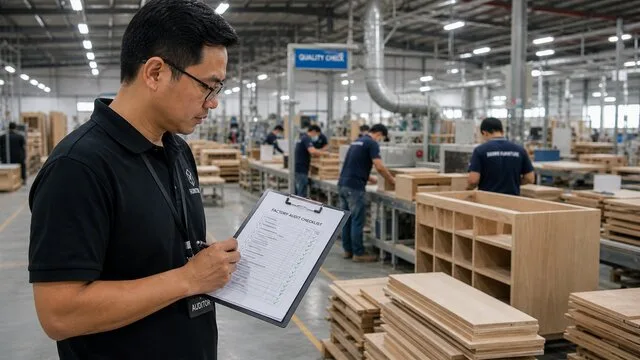
A factory audit is the most direct tool a buyer has for understanding whether a supplier can actually deliver what they claim. A capability certificate tells you what a factory has qualified for. A factory audit tells you whether the systems, processes, and people that produced that certificate are still in place and functioning as expected today.
This checklist covers the key evaluation areas for a US furniture importer auditing a potential supplier in Malaysia, Vietnam, or Indonesia — whether conducting the audit directly or reviewing a third-party audit report.
Quality management systems
Evaluate whether the factory has a functioning quality management system — not just a certificate on the wall. ISO 9001 certification is a useful indicator, but the real question is whether quality is managed through documented processes or through individual supervisor knowledge. Key things to look for:
- documented inspection procedures at incoming material, in-process, and final stages
- a defect tracking system that records and trends quality data over time
- a golden sample or reference standard that production is actively checked against
- defined corrective action processes when quality holds are triggered
- customer complaint records and evidence of root cause resolution
A factory that manages quality through process documentation rather than key-person knowledge is more resilient to staff turnover and production variability.
Social compliance and labor practices
Major US retailers require evidence of social compliance from their suppliers. SA8000 certification or BSCI/amfori audit completion are the most common frameworks used in Southeast Asian furniture manufacturing. Key areas evaluated include:
- working hours and overtime compliance with local labor law
- wage payment records and minimum wage compliance
- no child labor and age verification documentation
- health and safety provisions — fire exits, emergency equipment, PPE availability
- freedom of association and grievance mechanisms
Factories that are experienced with major US retail supply chains will typically have current social compliance audit documentation. Factories that do not will require more intensive due diligence before onboarding.
Production capacity and capability
Understanding what a factory can actually produce — not what it claims it can produce — requires physical verification. During an audit, evaluate:
- the number and type of production lines and their current utilization
- whether the equipment necessary for your product category is present and functioning
- workforce headcount and the proportion of skilled versus general labor
- current order book and production calendar — is there realistic capacity for your volume?
- subcontracting practices — is the factory producing everything in-house or outsourcing key processes?
A factory that regularly subcontracts finishing or assembly work to outside facilities has a quality control gap that needs to be understood and managed.
Compliance documentation
Review the factory's compliance documentation portfolio during the audit. Key documents to request and verify:
- CARB/TSCA TPC certificates for panel materials in use
- BIFMA or other structural test reports for products in your category
- Business registration, export licenses, and tax compliance records
- Environmental compliance documentation relevant to the factory's jurisdiction
Verify that certificates are current, that they cover the materials and products actually in production, and that the issuing bodies are the correct accredited entities — not self-issued or unverifiable documents. CARB and TSCA compliance documentation is a non-negotiable requirement for wood furniture exports to the US market.
Material sourcing and traceability
Ask the factory to walk through their material sourcing for a representative product in your category. Understand where each major component comes from, what documentation exists for each supplier, and how the factory verifies that materials meet specification upon receipt. Factories with documented material approval processes and incoming quality inspection are substantially lower risk than factories that trust their suppliers without verification.
Top Systems Group conducts and reviews factory audits across Malaysia, Vietnam, and Indonesia as part of supplier qualification for US and Canadian furniture brands. Contact us to discuss what your audit process should cover.
Talk to our team →Management responsiveness and communication
The audit visit itself is a communication test. How does factory management respond to detailed technical questions? How transparent are they about current production challenges? Are there deferred answers that never come back? A factory management team that is engaged, technically knowledgeable, and responsive to difficult questions is a strong indicator of a relationship that will function well under production pressure. A management team that deflects, over-promises, or becomes evasive when asked about specific compliance documentation is a risk signal worth taking seriously.
Key Takeaways
- Audit quality management systems for documented processes, defect tracking, and corrective action capability
- Verify social compliance documentation — SA8000 or BSCI/amfori audit records for major retail supply chains
- Physically assess production capacity, equipment, and workforce against your specific product requirements
- Review and verify compliance documentation: CARB/TSCA, BIFMA test reports, business registration
- Understand material sourcing and traceability — ask factories to walk through the supply chain for a representative product
- Management communication quality during the audit visit is a leading indicator of the relationship under production pressure